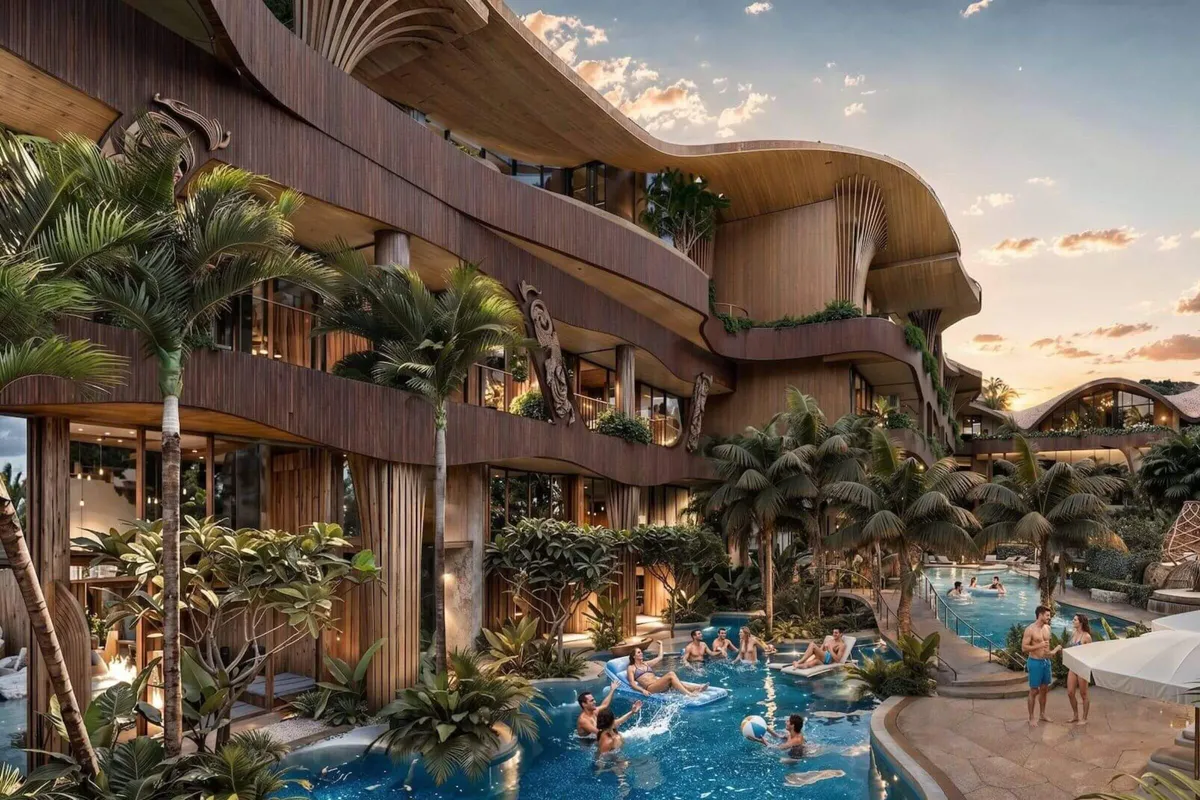
Investing in The Wylder Hotel Bali: Your Most Frequently Asked Questions Answered
Fractional ownership, investment returns, leasehold, construction timelines and everything Australians should understand before investing in The Wylder Hotel in Canggu.
Bali property investing has changed.
For Australians looking beyond traditional property investment, professionally managed hotels and resorts are creating opportunities to participate in Bali's tourism economy without the responsibilities of buying, maintaining and managing an individual villa.
But with a different investment model comes a different set of questions.
What exactly am I buying? How are returns calculated? Who manages the hotel? What happens if construction is delayed? And can I eventually sell my investment?
These are exactly the questions we encourage investors to ask.
At Bali Property Investment, we believe understanding the structure behind an investment is just as important as understanding its potential returns.
So, let's answer the questions we hear most frequently about The Wylder Hotel in Berawa, Canggu.
1. What am I actually buying when I invest in The Wylder?
This is probably the most important question of all.
When you invest in The Wylder, you're acquiring a fractional leasehold interest in a specific hotel room, together with proportional participation in the resort's facilities.
You're not buying freehold land, and you're not purchasing an entire villa.
Instead, you're participating in a larger hospitality development designed to generate income through professionally managed accommodation and resort operations.
Each hotel room, referred to as a key in the hospitality industry, is divided into 20 equal fractions.
One fraction represents a 5% leasehold interest in that room.
You can purchase one fraction or multiple fractions, either within the same room or across different room categories.
This makes it possible to participate in a luxury hotel development without needing the capital required to purchase an entire property.
Is fractional ownership the same as a timeshare?
No.
A traditional timeshare generally focuses on purchasing rights to use accommodation for specified periods.
The Wylder's fractional investment model is structured around a leasehold interest and participation in income generated by the resort.
Owner stay arrangements may also be available under the investment agreements, but the primary purpose of the investment is participation in the hospitality business.
The precise legal rights, including use, income and transfer rights, are defined in the leasehold documentation.
2. How long does the leasehold last?
The Wylder's leasehold term is 50 years.
At the end of the lease, the leasehold interest returns to the lessor.
This is an important distinction from Australian freehold property, where ownership of the land generally continues indefinitely.
When assessing a Bali leasehold investment, investors should consider the length of the lease, the remaining term at any future sale, and the contractual arrangements governing the interest.
3. Who is developing and operating The Wylder?
A hotel's long-term performance depends on more than its location and design.
The developer, architect and hospitality operator all play important roles.
The Wylder brings together:
Developer: PT Geonet Developments International.
Hotel operator: SONO Hotels & Resorts, described in the project information as South Korea's largest resort operator, with more than 11,000 rooms.
Architect: Inspiral Architects, a recipient of the UNESCO Prix Versailles award.
Having a dedicated hospitality operator means investors aren't personally responsible for guest bookings, housekeeping, staffing, marketing or the daily management of the resort.
However, investors should still assess the operator's experience, contractual responsibilities and financial performance assumptions.
4. Where does my investment income actually come from?
Unlike an individual villa, where income generally depends on the rental performance of that one property, The Wylder uses a pooled hospitality income model.
Two main income streams contribute to the investor pool.
Accommodation income
Under the published investment model, 45% of net room income is allocated to the investor income pool.
Net room income is calculated as gross room revenue less a 5% sinking fund.
This means investors participate in accommodation income across the relevant pool rather than simply receiving rent from their individual room.
Resort facilities and hospitality income
The second component is 75% of the net profit before tax generated by the resort's facilities.
This includes the wider hospitality businesses operating within the hotel.
The Wylder is designed to offer far more than accommodation, with planned facilities including:
A 75-metre lagoon pool.
Rooftop restaurant and bar.
Speakeasy lounge.
Gym, spa and wellness facilities.
Gold Class cinema.
Café and coworking spaces.
Kids' club, gardens and other guest experiences.
A Locavore-led dining partnership is also proposed and remains under discussion.
Why does this matter?
Because the resort has the potential to generate income from guests staying in the hotel and visitors who come to dine, relax, work or enjoy its facilities.
The financial model estimates that accommodation represents approximately one-quarter of total resort revenue.
That means a meaningful proportion of the projected business revenue comes from the wider resort operations.
Importantly, revenue and profit aren't the same thing. Operating expenses must be accounted for before the relevant facilities profit can be shared.
5. Does the room type I invest in change my percentage return?
Not under the published value-weighted income allocation model.
Each fraction's share of the investor pool is calculated according to its purchase price relative to the gross retail pool.
In other words, the percentage return is designed to be consistent across room categories, while the actual dollar amount received depends on how much you've invested.
For example, if two investors receive a 12% annual distribution:
Investment | Illustrative annual income |
AUD $50,000 | $6,000 |
AUD $100,000 | $12,000 |
AUD $250,000 | $30,000 |
These figures are illustrations, not forecasts or promised distributions.
The important point is that the investment amount determines the investor's proportional participation, rather than the performance of one particular room.
6. Is the 8% annual return guaranteed forever?
No — and understanding this distinction is essential.
There are two separate stages of the investment model where an 8% figure applies.
During construction
The published investment structure includes an 8% annual construction cash rebate, calculated on advance consideration and paid across 36 months from FY2026 to FY2028.
This is structured as a reduction in the net lease price, rather than income generated from operating hotel rooms.
During the first two years of operations
For FY2029 and FY2030, the model provides for a minimum lease income floor.
Each year, the investor receives the higher of their modelled operating income or the applicable contractual minimum, subject to the agreement's terms.
From the third year of operations
From FY2031 onward, distributions are based on the resort's actual performance.
There is no ongoing 8% minimum floor under the published model.
This means investors participate in the financial performance of the hotel, which may be higher or lower than projected.
The minimum arrangements are contractual obligations and should not be interpreted as risk-free or independently guaranteed payments.
7. How are The Wylder's projected investment returns calculated?
Projected returns are based on the anticipated financial performance of the hotel and its hospitality businesses.
The model considers factors including:
Room occupancy: How many available rooms are expected to be booked throughout the year.
Average Daily Rate (ADR): The average nightly price achieved by the hotel.
Accommodation revenue: The combined income generated from room bookings.
Facilities revenue and profit: The financial contribution of restaurants, bars, wellness, entertainment and other resort businesses.
Investor participation: The agreed allocation of net room income and facilities net profit to the investor pool.
The resulting projected investor distributions are then compared with the investment amount to calculate an annual percentage return.
For example:
An investor who contributes AUD $100,000 and receives AUD $15,000 in annual distributions achieves a 15% annual cash yield.
However, projected returns are not guaranteed returns.
The financial model includes lower, expected and higher performance scenarios to help investors understand how different operating outcomes may affect distributions.
Investors should review all scenarios rather than relying on a single projected percentage.
Explore The Wylder Income Profile
8. What happens if the resort doesn't perform as projected?
This is one of the most sensible questions an investor can ask.
Hotels are operating businesses, and their financial results can be influenced by tourism demand, occupancy, room rates, competition, staffing costs, maintenance and wider economic conditions.
The Wylder's financial model considers lower-performance scenarios.
During the first two operating years, the minimum lease income arrangements provide a contractual floor, subject to their terms and the responsible party's ability to meet its obligations.
From the third operating year, investor distributions depend on the resort's actual financial results.
A lower-performing year may mean lower distributions.
The most useful question isn't simply "What return is projected?" It's "What assumptions need to be achieved to deliver that return?"
That's why we encourage investors to understand the income profile before committing capital.
9. When is The Wylder expected to open?
The current project timeline targets 2029, with FY2029 identified as the first operating year.
According to the developer's project information:
The PBG building permit application was submitted and registered with the Indonesian government in March 2026.
Site clearing took place in May 2026.
Construction is expected to commence approximately six to nine months after the PBG milestone.
The construction period is estimated at approximately 27 months.
These are projected milestones rather than confirmed completion dates.
Investors should request the latest development update and distinguish between a permit application being registered and final approval being granted.
10. What happens if construction is delayed?
Construction delays are a risk with any off-the-plan development, whether in Australia or overseas.
The important questions are what the investment agreements say about completion deadlines, extensions, construction rebates and investor rights if milestones aren't achieved.
Investors should understand:
Whether construction rebate payments continue during a delay.
What contractual remedies are available if completion is significantly delayed.
Whether there are any long-stop dates or termination provisions.
Who is responsible for meeting payment obligations during construction.
These matters should be confirmed against the signed investment documents rather than assumed from the projected construction schedule.
11. What currency do I invest in, and what currency are returns paid in?
The Wylder's underlying hospitality business operates in Indonesia and earns revenue in Indonesian rupiah.
However, the published investment structure states that investors contribute and receive payments in Australian dollars.
This doesn't eliminate currency risk.
Movements between the Indonesian rupiah and Australian dollar can influence the value of operating income when converted into AUD.
The financial model includes exchange-rate assumptions, which investors should review when considering projected returns.
12. What nightly room rates is the financial model based on?
The published investment information identifies advertised nightly rates starting from approximately AUD $417 for a Standard Room.
However, this is different from the net room rate used for financial modelling.
For the Standard Room example, the model uses a clean rate of approximately AUD $279 per night, after allowing for taxes, service charges and booking commissions.
This distinction matters because hotels don't retain the entire advertised room price as operating revenue.
When reviewing hotel investment projections, investors should understand whether the financial assumptions use gross advertised rates or net revenue after relevant deductions.
13. Can I sell my fractional investment before the lease expires?
The Wylder's investment agreements contain provisions governing transfers and exits.
However, investors shouldn't assume that a fractional leasehold interest can be sold as quickly or easily as shares on the ASX.
Before investing, it's important to understand:
Whether transfers require approval.
Whether there are restrictions on selling.
How a future sale price may be determined.
Whether an established resale market exists.
What costs or taxes may apply.
A 50-year leasehold interest doesn't necessarily mean you must hold the investment for 50 years, but the ability to exit depends on the contractual arrangements and finding an eligible buyer.
14. Can investors stay at The Wylder?
Owner stay arrangements form part of the investment documentation.
These benefits are separate from the financial distributions investors may receive.
The precise entitlement, booking conditions, availability and any applicable restrictions should be confirmed against the current agreement.
For investors who already love travelling to Bali, the potential to enjoy the resort personally can be an additional attraction — but the investment's financial merits should be assessed independently of holiday benefits.
15. Why invest in a hotel rather than buy your own Bali villa?
This comes down to the kind of investment experience you're looking for.
Owning a villa generally means taking responsibility, directly or through a manager, for an individual accommodation asset.
That includes understanding local ownership structures, licensing requirements, maintenance, occupancy, marketing and the property's financial performance.
A fractional hotel investment offers a different model.
Rather than managing an individual villa, investors participate in a professionally operated hospitality business with pooled income arrangements.
The Wylder model offers:
A lower capital entry point than purchasing an entire luxury villa.
Professional hotel management.
Exposure to multiple hospitality income streams.
Participation in a broader resort income pool.
A defined 50-year leasehold structure.
However, fractional hotel investment also carries its own risks, including development risk, operator performance, contractual complexity and potentially limited resale liquidity.
Neither structure is automatically better for every investor. The important thing is understanding what you're buying and how it is expected to generate income.
The bottom line: Ask the questions before you invest
Investing in Bali doesn't have to mean purchasing a villa, becoming a landlord or managing an overseas property.
The Wylder offers an alternative way to participate in Bali's hospitality market through fractional leasehold interests in a professionally managed lifestyle hotel.
But like any investment, the opportunity needs to be assessed on more than projected returns.
Understand the ownership structure. Understand the income model. Understand the risks. And make sure the contractual arrangements match your expectations.
At Bali Property Investment, our focus is on helping Australians become better-informed investors.
I'm Sarah-Jane Picton-King, founder of Bali Property Investment, and I personally have four investments in Bali.
I'm happy to share what I've learnt, explain the different investment structures and answer your questions about the market.
Have more questions about The Wylder?
Whether you're exploring your first Bali investment or considering adding another income-producing asset to your portfolio, let's have a conversation.
Or explore The Wylder Investor Information Room for additional project details.
Disclaimer: This article provides general information and is not personal financial advice. Projected returns, construction timelines and future income distributions are subject to assumptions, contractual terms and investment risks. Investors should obtain the current legal documentation and seek independent professional advice before making an investment decision.


